
1. Ritual
Retros because “Agile says so”. Issues surface. Actions are vague and forgotten.
 NABS Confidence
Concepts
A retro is cheap, and it is easy to leave it as a ritual. The curve is the picture Home and the Retro Dashboard use for what “better” looks like.
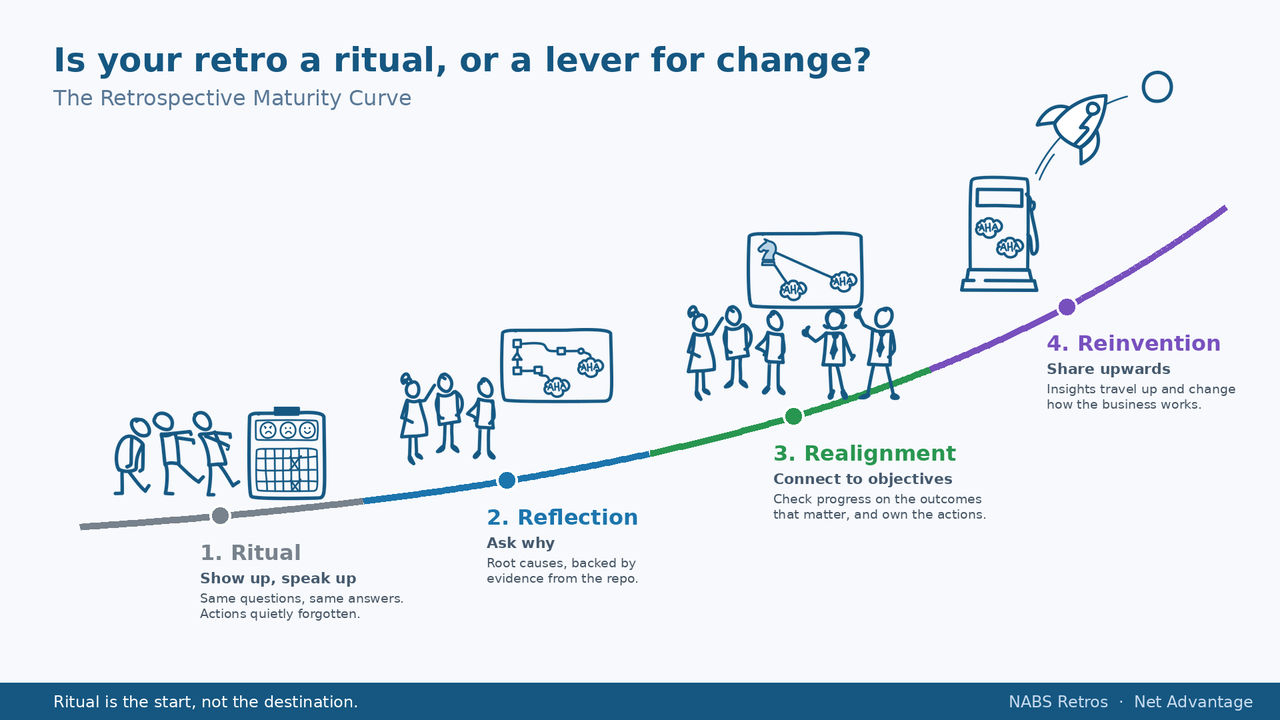
Retros because “Agile says so”. Issues surface. Actions are vague and forgotten.
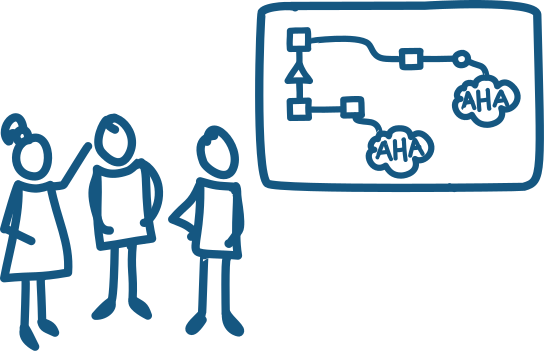
The team digs into why and follows up, but insights stay local.
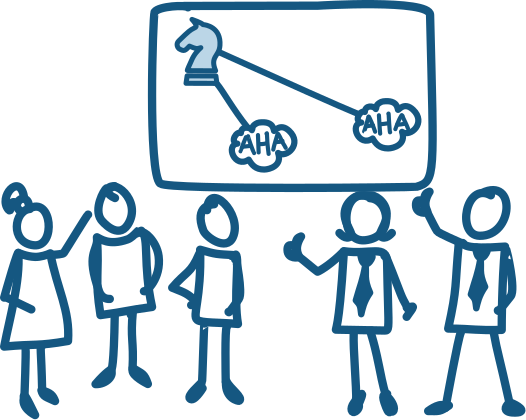
Leaders listen. What the team learns informs priorities and plans.

Retro insights feed planning. Continuous improvement is the culture.
The four drawings are Darrel Schreyer’s. The same captions appear on Home.
The Retro Dashboard has six stages. The first two sit on Ritual, and each later stage names the part of the curve it is for.
| Stage | On the curve | What it is for |
|---|---|---|
| 1 Prepare | Ritual | Period, feedback template, the objectives this retro focuses on, and an invitation. |
| 2 Gather | Ritual | Feedback from everyone, in their own time. |
| 3 Insights | Reflection | What the repository shows, and a summary of the feedback. |
| 4 Objectives | Realignment | Evidence, an assessment, and the team’s verdict. |
| 5 Decide | Realignment | A few actions, each with an owner. |
| 6 Close & share | Reinvention | Mark the retro complete, and share what leaders need to hear. |
The extension’s own warning, when a retro has no objectives, is: a retro that is not tied to an objective stays at ritual and reflection, because there is nothing to realign to.
Close & share, and archiving to a Discussion, are how a record leaves the team’s folder. Archiving carries the retro to a place other people can read. It does not, by itself, change a plan or a budget.
Coming soon. A leadership digest, and trends across retros, are not in this version. Guided views for Insights, Objectives, Decide, and Close & share are not built yet. Those stages tell you so, and link to the panels that exist today.
The curve comes from a two-part series:
Home links to the same articles.